Can omega-3s help with ADHD?
 Author:
 Attention deficit hyperactivity disorder (ADHD) is a complex neurodevelopmental disorder that affects millions of children and adults worldwide. It manifests itself in difficulties in sustaining attention, hyperactivity and impulsivity, which can have a significant impact on academic, work and social life. While traditional treatments include pharmacotherapy and behavioral therapy, there is a growing interest in complementary approaches, and omega-3 fatty acids are prominent among them.
The question is: Can omega-3s really help with ADHD? And if so, how?
Content:
- What are omega-3 fatty acids and why are they important for the brain
- Omega-3s and ADHD: Scientific Evidence
- Dosage and sources of omega-3
- Important warnings and side effects
- Conclusion
What are omega-3 fatty acids and why they are important for the brain
Omega-3 fatty acids are essential polyunsaturated fatty acids (PUFAs), which means that the human body cannot make them on its own and must take them in through food. Two main forms are particularly important for the brain:
- EPA (eicosapentaenoic acid): plays a key role in regulating inflammatory processes and has an effect on mood and behaviour.
- DHA (docosahexaenoic acid): It is the most abundant omega-3 fatty acid in the brain and retina. It is a building block of cell membranes, especially in the brain, where it makes up to 10-15% of the total weight of the brain. It is essential for the proper development and functioning of the nervous system, including the transmission of signals between neurons and the promotion of optimal levels of neurotransmitters such as dopamine and serotonin.
The brain is made up of approximately 60% fat, so a sufficient intake of good quality fats, including omega-3s, is crucial for its proper functioning. Omega-3 deficiency can lead to impaired cellular communication, reduced concentration, impaired memory and other cognitive and psychological problems.

Omega-3 and ADHD: Scientific Evidence
Research into the relationship between omega-3 fatty acids and ADHD has been ongoing for many years, providing increasingly convincing evidence of their potential benefits.
Several studies and meta-analyses have found that children and adults with ADHD tend to have lower blood levels of omega-3 fatty acids compared to individuals without the disorder. This suggests that a deficiency of these nutrients could play a role in the pathophysiology of ADHD.
Improving ADHD symptoms
Many studies suggest that supplementation with omega-3 fatty acids (especially a combination of EPA and DHA) may lead to improvements in various symptoms of ADHD, including:
- Attention and concentration: omega-3s may help improve the ability to maintain attention and complete tasks.
- Hyperactivity and impulsivity: Reductions in hyperactive behavior and impulsivity have been observed.
- Behavior and mood: Some studies show a reduction in restlessness, aggression, and mood swings.
- Cognitive function: Improvement in memory and overall cognitive abilities.
- Sleep: Children with ADHD often suffer from sleep disturbances, and some research suggests that omega-3s may help improve sleep quality.
Mechanism of action
Omega-3 fatty acids are thought to affect the brain in several ways that may be relevant to ADHD:
- Structural integrity of brain cells: DHA is crucial for the formation and maintenance of healthy cell membranes in the brain, which ensures optimal communication between neurons.
- Neurotransmitter activity. Impaired dopamine signalling is often thought to be involved in ADHD.
- Anti-inflammatory effects: Omega-3s have anti-inflammatory properties that may be beneficial as some individuals with ADHD experience mild inflammation in the brain.
- Blood flow through the brain: Some theories suggest that omega-3s may improve blood flow through the brain, leading to a better supply of oxygen and nutrients.

Omega-3s for children and adults with ADHD
Children: For children with ADHD, omega-3 fatty acids are often investigated as an adjunctive therapy. Studies show that supplementation can improve reading, spelling, and behavior. It is important to note that DHA is crucial for proper development of the child's brain from intrauterine development and in early childhood. Breast milk is a natural source of DHA.
Adults: Even in adults with ADHD, omega-3 fatty acids can provide relief from symptoms such as lack of attention, impulsivity and emotional instability. Adults with ADHD also show lower blood levels of omega-3s.
Dosage and sources of omega-3
The optimal dosage of omega-3 for individuals with ADHD is not clearly established and may vary depending on age, severity of symptoms and individual response. In general, it is recommended to focus on EPA and DHA intake.
Recommended doses:
- The World Health Organization recommends consuming a minimum of 200-500 mg of EPA + DHA per day.
- Some studies in children with ADHD have used doses ranging from 600 mg to 1500 mg of EPA + DHA per day. For example, one study found improvements in ADHD symptoms when EPA + DHA was combined at a dose of ≥ 750 mg per day for 12 weeks.
- The ratio of EPA to DHA may also be important. Some research suggests that a higher ratio of EPA to DHA may be more beneficial in ADHD.
Our Recommended Items:
Recommended

Prom-in Native Omega 3
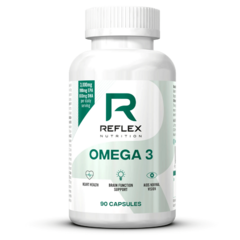
Reflex Omega 3

Nutrend Omega 3 Plus

GymSupps Omega 3
Sources of omega-3:
- Marine fish: the richest sources of EPA and DHA are fatty marine fish such as salmon, mackerel, sardines, tuna (beware of mercury in some types of tuna).
- Fish oil is a common dietary supplement with omega-3s. It is important to choose quality products that are purified of heavy metals and other impurities. There are also enterosolvent tablets that can minimize fishy aftertaste and indigestion.
- Plant sources: plant sources such as flaxseeds, chia seeds and walnuts contain ALA (alpha-linolenic acid), which the body can convert to EPA and DHA to a limited extent. However, this conversion is inefficient, so people with ADHD should not rely solely on plant sources for adequate EPA and DHA intake.
Important warnings and side effects
It is crucial to stress that omega-3 fatty acid supplementation is not a treatment for ADHD in the true sense of the word. It should be seen as an adjunctive therapy that can support overall treatment and alleviate symptoms. It is always essential to consult with a doctor or nutritionist when taking supplements, especially if the individual is taking other medications or has health problems.
Possible side effects
Omega-3 fatty acids are generally considered safe. At higher doses, mild gastrointestinal upset such as nausea, diarrhea, bloating or fish-flavored burping may occur. Rarely, high doses may affect blood clotting, so caution is necessary in persons taking blood thinners.
Conclusion
Research suggests that omega-3 fatty acids, especially EPA and DHA, play an important role in brain health and may be beneficial in alleviating ADHD symptoms. Their deficiency in the body is often demonstrated in people with ADHD, and supplementation appears to be a promising complementary approach to traditional treatments. Although they are not a panacea, they can help improve attention, behavior, mood, and cognitive function.
For optimal results, it is important to focus on adequate intake of quality omega-3 fatty acids, either from oily marine fish or from quality supplements, and always consult a professional for advice on suitability and dosage. Because of their low risk of side effects and potential benefits, omega-3 fatty acids represent a promising avenue for many individuals with ADHD who are seeking a comprehensive approach to managing their symptoms.
No posts have been made yet.