




Mike Mentzer believed that one set was enough. What does modern science say about his legendary workout?
 Author:
Imagine you go to the gym, warm up thoroughly, and do just one truly challenging set for each exercise. No extra sets, no unnecessary repetitions of the same exercises, and no two-hour workouts. After a few dozen minutes, you head home and give your muscles a few days of rest.
This was precisely the philosophy that American bodybuilder Mike Mentzer helped promote in the 1970s and 1980s. At a time when many of his competitors believed in high training volume, Mentzer held an almost opposite view. According to him, what mattered wasn’t how much work an athlete did, but how intense a stimulus he could create for his muscles.
His “Heavy Duty” training system gradually gained a number of followers and continues to spark debate to this day. However, current science presents an interesting paradox.
Mentzer was right in that we don’t need to train our muscles for hours on end. However, research suggests that a single set may not be the best path to maximum muscle growth.
Article Contents:
- What exactly did Mentzer’s Heavy Duty training entail?
- One set can indeed build muscle. But is that the maximum?
- The Most Comprehensive Review from 2026: How Many Sets Do Muscles Actually Need?
- Mentzer’s Second Principle: Do We Have to Train to Failure?
- What about recovery? Was Mentzer right about this, at least?
- Can we still apply anything from Heavy Duty today?
- Quality training also requires quality nutrition
- So was Mike Mentzer a genius, or was he wrong?
What exactly did Mentzer’s Heavy Duty training entail?
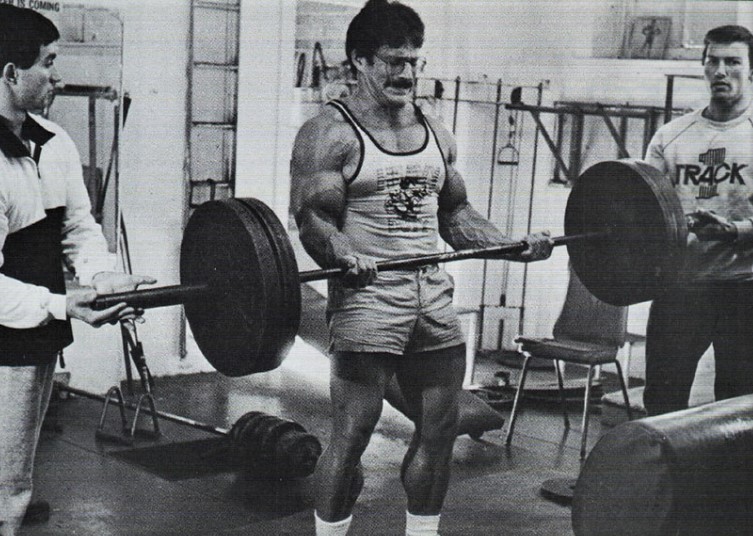
Mike Mentzer wasn’t just a bodybuilder with an extraordinary physique. He was also one of the figures who sought to approach strength training as a system based on specific principles. In 1979, he won the heavyweight division at Mr. Olympia, and a year later he placed fifth in the same competition. His training philosophy was based on the high-intensity methods promoted by Arthur Jones.
However, Mentzer gradually developed this approach into his own system, called Heavy Duty. Its basic idea was simple: muscles need a sufficiently strong stimulus to grow, but the growth itself occurs only during the subsequent recovery period. That is why he emphasized short workouts, very high effort, and a relatively low number of working sets.
In the later, most streamlined versions of his program, he even recommended performing only a few exercises during a single training session and taking very long intervals between workouts. It is important to note, however, that Mentzer’s system evolved over the course of his career. There was no single, unchanging version of Heavy Duty that he used from start to finish.
One of its most distinctive principles, however, remained a single, exceptionally intense working set per exercise, often performed to muscle failure.
One set can indeed build muscle. But is that the maximum?
This is where the story gets interesting. Modern research confirms that even a relatively small amount of strength training can lead to increases in strength and muscle mass. So you don’t have to do twenty sets for each muscle group to see results.
However, this does not automatically mean that one set is the optimal amount. In 2017, a team led by Brad Schoenfeld published a meta-analysis of fifteen studies that examined the relationship between weekly training volume and muscle growth. The results showed that a higher number of working sets was, on average, associated with greater muscle mass gains.
A large-scale meta-analysis published in 2026 in the journal *Sports Medicine* reached similar conclusions. It evaluated 67 studies involving a total of 2,058 participants. The researchers found that as weekly training volume increased, muscle growth generally increased as well. At the same time, however, the benefit of each additional set gradually decreased.
So while more sets can mean more muscle growth, it’s not true that every additional set will provide the same benefit.
And it is precisely on this point that Mentzer’s philosophy partially aligns with current science. Unnecessarily high volume may not be effective. However, extremely low volume, in turn, may mean that we are not utilizing our full growth potential.
The Biggest Review from 2026: How Many Sets Do Muscles Really Need?
An even more interesting answer came from a new expert statement by the American College of Sports Medicine. Researchers evaluated 137 systematic reviews involving more than 30,000 participants. The goal was to determine which variables of strength training are most important for muscle growth, strength, and other physical abilities.
And the results were fairly clear. A higher weekly training volume proved to be more beneficial for muscle hypertrophy, with positive results associated primarily with a volume of around ten or more sets per muscle group per week. The authors also noted that two working sets per exercise generally lead to greater adaptations than a single set.
However, this does not mean that every athlete must automatically perform ten, fifteen, or twenty sets per muscle group. The optimal volume depends on fitness level, intensity, exercise selection, and individual recovery capacity.
From a scientific standpoint, however, we currently lack sufficient evidence to claim that a single working set represents the best possible strategy for maximum hypertrophy.
Mentzer’s Second Principle: Do We Have to Train to Failure?
One of the most distinctive features of Heavy Duty was its emphasis on muscle failure. Mentzer believed that it is precisely the last, exceptionally demanding repetitions that are crucial for stimulating muscle growth. But do we really have to complete every set until the point where we can no longer perform another repetition?
A meta-analysis published in 2023 compared training to failure with training in which athletes stopped earlier. The researchers found no convincing benefit of immediate muscle failure for hypertrophy. However, another study from 2024 suggested that ending sets relatively close to failure may be beneficial for muscle growth.
The key distinction, therefore, lies between a sufficiently intense set and the need to always continue until absolute exhaustion. For most athletes, a suitable approach may be to end a working set at the point where they could technically still perform approximately one to three more repetitions.
For certain safely performed isolation exercises, failure can be used in a targeted manner. However, it is not necessary to consider it a mandatory part of every set. Furthermore, training to failure too frequently can increase fatigue and impair performance in subsequent sets.

What about recovery? Was Mentzer right about this, at least?
Mentzer rightly emphasized that muscles need sufficient time to recover. The problem arises, however, when this idea is turned into a universal rule. In some of his later programs, he recommended very long breaks between workouts, sometimes even more than a week.
Current research shows that training frequency alone may not have a significant effect on hypertrophy, provided the total weekly volume is comparable. This means that muscles can grow with different training schedules throughout the week. However, if someone completes only a few working sets and then waits many days for the next workout, their total volume may be too low.
This is where the difference between reasonable recovery and unnecessarily long inactivity becomes apparent.
Recovery is not the opposite of training. It is an essential part of it. On its own, however, it cannot compensate for an insufficient training stimulus.
Can we still benefit from Heavy Duty today?
Absolutely. Mentzer’s system serves as an interesting reminder that the quality of training is more important than simply counting the time spent at the gym. If someone performs a large number of sets without sufficient intensity, they may not achieve better results than someone who trains for a shorter time but does so systematically and with sufficient effort.
For the average gym-goer, the following approach may be a suitable compromise:
- Focus on proper form and gradually increasing the load.
- For most exercises, perform two to three working sets instead of just one.
- End most sets relatively close to muscle failure.
- Structure your workout so that each muscle group receives sufficient weekly stimulation.
- Monitor not only fatigue but, above all, the long-term development of strength and muscle mass.
It is not necessary for every athlete to train according to the same program. A beginner can achieve very good results with a lower volume. An advanced bodybuilder, on the other hand, often needs a greater number of high-quality working sets. The decisive factor is whether a specific program leads to long-term progress.
Quality training also requires quality nutrition
Whether you prefer short, intense workouts or a higher training volume, your muscles need not only an appropriate workload but also quality nutrition to grow. In particular, adequate protein intake plays a key role, as it contributes to the growth and maintenance of muscle mass. If you’re unable to meet your daily protein needs through your regular diet, GymSupps XWhey Protein can be a practical option. It combines whey concentrate, isolate, and hydrolysate and can serve as an easy way to supplement your protein intake after a workout or throughout the day.
For athletes focused on strength performance, GymSupps Creatine Monohydrate may also be relevant. When taken at a daily dose of 3 grams, creatine enhances physical performance during short-term, high-intensity exercise intervals. However, even high-quality supplementation cannot compensate for a poorly designed training program or insufficient recovery. It is precisely the combination of these factors that is crucial for long-term athletic development.
Recommended

Creatine Monohydrate 500g 1+1

GymSupps XWhey Protein
So was Mike Mentzer a genius, or was he wrong?
Perhaps the truth lies somewhere in between. Mike Mentzer challenged the then-widespread belief that the best way to build muscle was to constantly add more and more sets. He emphasized the importance of intensity, recovery, and the actual quality of the working sets. In this regard, his ideas have stood the test of time.
At the same time, however, current science shows that for maximum muscle growth, it’s often beneficial to perform more than a single working set and that each set doesn’t have to end in absolute failure. So his philosophy isn’t useless. It’s just not a one-size-fits-all guide for everyone.
Perhaps Mentzer’s greatest contribution was not the claim that one set is enough. It was the question he forced the bodybuilding world to ask: How much training do we really need to improve?
And it is precisely this question that sports science continues to seek an answer to to this day.
Recommended

New 100% Whey Protein 800g 1+1

XGen 90cps + Omega 3 90cps
No posts have been made yet.